
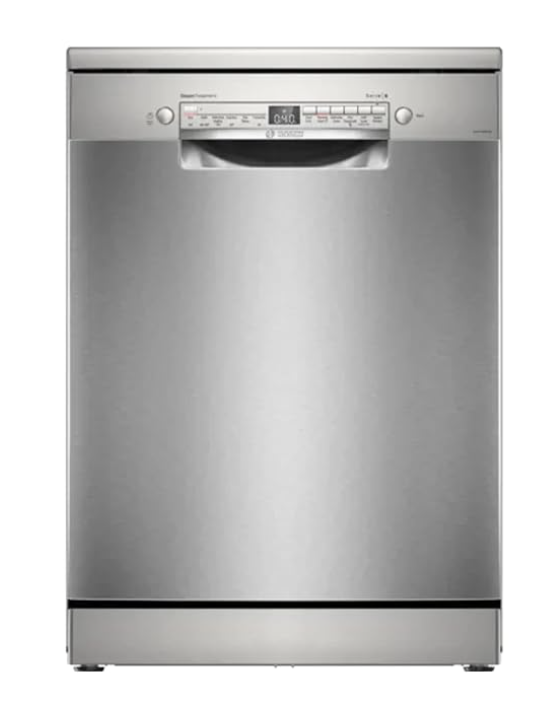
A dishwasher is simply a robot that cleans and rinses dirty dishes and” it actually uses a very controlled, high-temperature process that is more hygienic and water-efficient than hand washing
Bosch is one of the best dishwasher in market because it focus on German engineering, durability, and silent operation. While many brands compromise the quality of products by reducing the cost ,while Bosch main focus is to give best cleaning and drying process,along with it’s long life span.
1. How It Works
Despite what many think, a dishwasher doesn’t fill up like a washing machine. Here is the step-by-step process:
- A water (about 9–12 liters) fills the bottom basin.
The machine heats the water to 50°C–70°C. This high heat melts grease that cold water and soap can’t touch.
High-pressure spray arms spin and blast the dishes with a mix of hot water and detergent.
- Drain the dirty water is drained, and rinse clean
- It uses heat or a heating element to remove moisture.
2. Functions for Washing Different Utensils
Different dishwashes have different models and different model have various series.Bosch dishwashers which i used have following functions:
1.Steel kitchenware (plates, spoons, glasses)
- Washed in Auto / Eco mode (45–65°C)
- Lightly washesd & water saving
2. Kadhai, cooker, oily utensils
- Intensive Kadhai Programme (70°C hot water)
- Removes oil, masala stains & grease easily
3. Glass and delicate items
- Prevents scratches and damage
4.Daily utensils
- Auto mode adjusts temperature and water automatically
Some dishwashers have extra functions:
Half Load → for fewer utensils
Extra Dry → better drying
EcoSilence Drive → low noise
NOTE : Above details may variate from brand to brand and from model to model
3. Time Taken
The time depends on the mode you select:
Quick Wash: 30–60 minutes (for lightly soiled cups/plates).
Normal Cycle: 1.5–2.5 hours (standard everyday load).
Eco Mode: 3+ hours (uses less water/energy by soaking longer).
Intensive/Kadhai Mode: 2.5–3.5 hours (for heavy grease and burnt food).
4.Utensils Safe to Use Vs Not Safe to Use
| Safe to Use | Not Safe to Use (Hand Wash Only) |
| Stainless Steel (thali, spoons, pots) | Wood (spatulas/boards – will warp/crack) |
| Glass & Ceramic (standard plates/mugs) | Cast Iron (will rust and lose seasoning) |
| Hard Plastic (labeled dishwasher safe) | Non-stick Pans (coating may peel over time) |
| Silicone (spatulas, mats) | Aluminum (often turns black/dull) |
| Melamine (check for heat-safe label) | Copper & Brass (will tarnish/discolor) |
5. Detergents Used for Dishwasher
You cannot use normal dish soap. You must use special dishwasher products:
1. Dishwasher Detergent
Powder, liquid, or tablets
Example brands: Finish, Bosch or any other.
2. Dishwasher Salt
It can also be of any brand it, Softens hard water and protects machine
6.Why Bosch Dishwasher is Better Than Others
1. High Reliability & Long Life
2. Very Quiet Operations.
3. Excellent Cleaning Performance
4. Advanced Technology
5. Energy & Water Efficient
6.Designed in way where many utensiles can be used
⚠️ Small Disadvantages
It is:
Slightly more expensive.
Some models have longer wash cycles
✅ Conclusion
 Standard size fits most kitchens
Special kadhai function for Indian cooking
Cleans steel, glass, and heavy utensils
Multiple wash programs for different needs
Uses less water and conserve energy.